


Museo de Pesca Tradicional


Museo de Pesca Tradicional
Museo de Pesca Tradicional (Faro del Tostón) – located in a modern lighthouse is the Museum of Traditional Fishing. For centuries, commercial fishing has been one of the main economic activities on the island, in part due to the abundance of fish species within its waters. In previous times, local fishermen used to move around the island by season (to improve their catches). Fuerteventura’s main fishing areas were: El Cotillo, Corralejo, Puerto del Rosario and Gran Tarajal (in the center of the island), Morro Jable and Puerto de la Cruz in the south (of Jandia). Admission: €3 per non-resident person, €1.50 per resident (free for children under 12 years). Hours: 10:00 am – 6:00 pm (Tuesday – Saturday) (closed on Sunday & Monday).
Museo Arqueológico de Betancuria

Museo Arqueológico de Betancuria
Museo Arqueológico de Betancuria (Calle Roberto Roldán, 35637 Betancuria) — a variety of architectural artefacts from various excavations in Fuertaventura are on display here, and one can learn about the Majoreros’ way of life. The museum includes five spacious halls and is categorized into three sections: archaeology, ethnography and paleontology. Admission: €2 per person. Hours: 10:00 am – 6:00 pm (Tuesday – Saturday), closed on Sundays & Mondays.
Iglesia de Nuestra Señora de Candelaria

Iglesia de Nuestra Señora de Candelaria
Iglesia de Nuestra Señora de Candelaria (La Oliva) – this house of worship was built shortly after the founding of the local parish in 1708 and is one of the largest churches on the island. The church’s contrasting black basalt bell tower stands out against the its white-washed walls. The tower was also used during the middle ages as a place of refuge for the locals during pirate raids. The annual Fiesta de Nuestra Señora de Candelaria takes place at the beginning of February.
Iglesia de Nuestra Señora de Antigua

Iglesia de Nuestra Señora de Antigua
Iglesia de Nuestra Señora de Antigua (Calle Plaza, 3, 35630 Antigua) – this church, dedicated to the Virgin of Antigua and located in one of the oldest settlements in the island, was originally built during the 17th century, and went through a series of renovations over the centuries (including the introduction of a bell tower in the 18th century). The current structure replaced a previous one destroyed during the attack of Berber pirate attack Xabán Arráez in 1593. This chapel attracted the maximum number of worshippers during the island’s occasional periods of drought (since its local economy was based on grain production & export). Festivities are held in the Virgin’s honor every September 8.
Ermita de Nuestra Señora de la Peña

Ermita de Nuestra Señora de la Peña
Ermita de Nuestra Señora de la Peña (Calle Pedro Peña, 7B, 35637 Betancuria) – this 18th century church (opened in 1716) was built as a tribute to the Virgen de la Peña (patron saint of the island of Fuerteventura). Every September, locals hold a celebration for her (presided by the Bishop of the Diocese of the Canary Islands, and attended by hundreds of worshippers).
Ermita de San Pedro de Alcántara

Ermita de San Pedro de Alcántara
Ermita de San Pedro de Alcántara (La Ampuyenta, Puerto del Risario) – this chapel was built in 1681 and founded by Don Pedro Medina and his wife Doña Agustina de Bethencourt. This chapel is noted for its interior: impressive murals dedicated to the life of San Pedro de Alcántara (a Franciscan monk canonized by Pope Clement IX in 1669). Free admission.
Ecomuseo La Alcogida

Ecomuseo La Alcogida
Ecomuseum La Alcogida (Highway FV-207, 35611 Puerto del Rosario) – this museum, located in the north central part of the island, recaptures its rural lifestyle during the 19th century. Since this museum is housed in seven buildings, it has enough space to show 19th century life for local residents of all walks of life – from peasants to the wealthy (even showing the tools of workers from that period, like bakers and goldsmiths). Local farm animals are also represented (from goats to donkeys and camels). In addition, the museum shows how locals, whose island is arid and water supply a constant issue, must use a network of wells, ditches, cisterns, drains and pipes, to meet their daily water needs. There’s also a small bar and gift shop on the premises. Admission: €5 per person. Hours: 10:00 am – 6:00 pm (Tuesdays – Saturdays), closed on Sunday & Monday.
Casa Museo Miguel de Unamuno

Casa Museo Miguel de Unamuno
Casa Museo Miguel de Unamuno (Calle Virgen del Rosario 11, 35600 Puerto del Rosario) – this was the residence of Spanish philosopher Miguel de Unamuno (who lived there in 1924 when he was exiled for criticizing the country’s dictator Primo de Rivera). The early 20th century was a time when the island of Fuerteventura was still an isolated place, and not the vacation destination that it now is.
During his days in Fuerteventura, the writer ended up falling in love with the island, and started different works about it; including material on the local Majorero dialect. De Unamuno later returned to his post as a professor at Salamanca University when the Republicans came to power in the early 1930s. Free admission. Hours: 9:00 am – 2:00 pm (weekdays), 10:00 am – 1:00 pm (Saturdays), closed on Sundays & holidays.
Casa Mané / Centro de Arte Canario
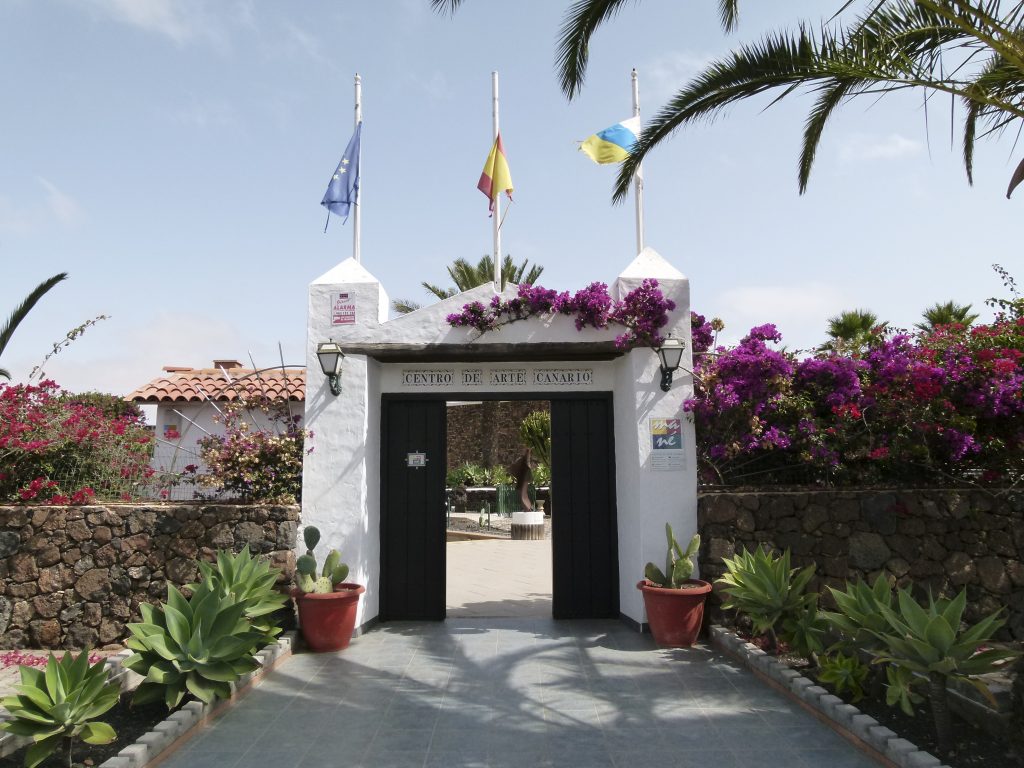
Casa Mané / Centro de Arte Canario
Casa Mané / Centro de Arte Canario (Calle Salvador Manrique de Lara, 35640 La Oliva) – this is reputed to be Fuerteventura’s loveliest art gallery, which exhibits and showcases contemporary Canarian art with a number of permanent exhibits (including the works of Alberto Manrique). The museum is housed in a restored 19th century villa, with extensive gardens used to exhibit a plethora of sculptures and also has a small cafe and gift shop and really is well-worth a visit. Hours: 10:00 am – 5:00 pm (weekdays), 10:00 am – 2:00 pm (Saturdays), closed on Sundays & holidays.
Casa de los Coroneles

Casa de los Coroneles
Casa de los Coroneles (La Oliva province) – as its name suggests, this stately house was the one-time home of the island’s governing colonel from the 18th century (Col. Melchor de Cabrera Bethencourt – a likely descendant of Fuerteventura’s original founder). The fact that this structure has windows (at a time when most local homes lacked them), as well as the presence of two battlements, confirmed the authority figure who lived here. The home also has a courtyard, servants quarters, and a cistern. In recent times, this site has been used for various cultural activities (exhibits, concerts, etc.). Even though the structure is in the process of being restored, it is still worth a visit. Free admission. Hours: 10:00 am – 2:00 pm (Tuesday – Sunday).


